







Cancer Awareness and Early Detection
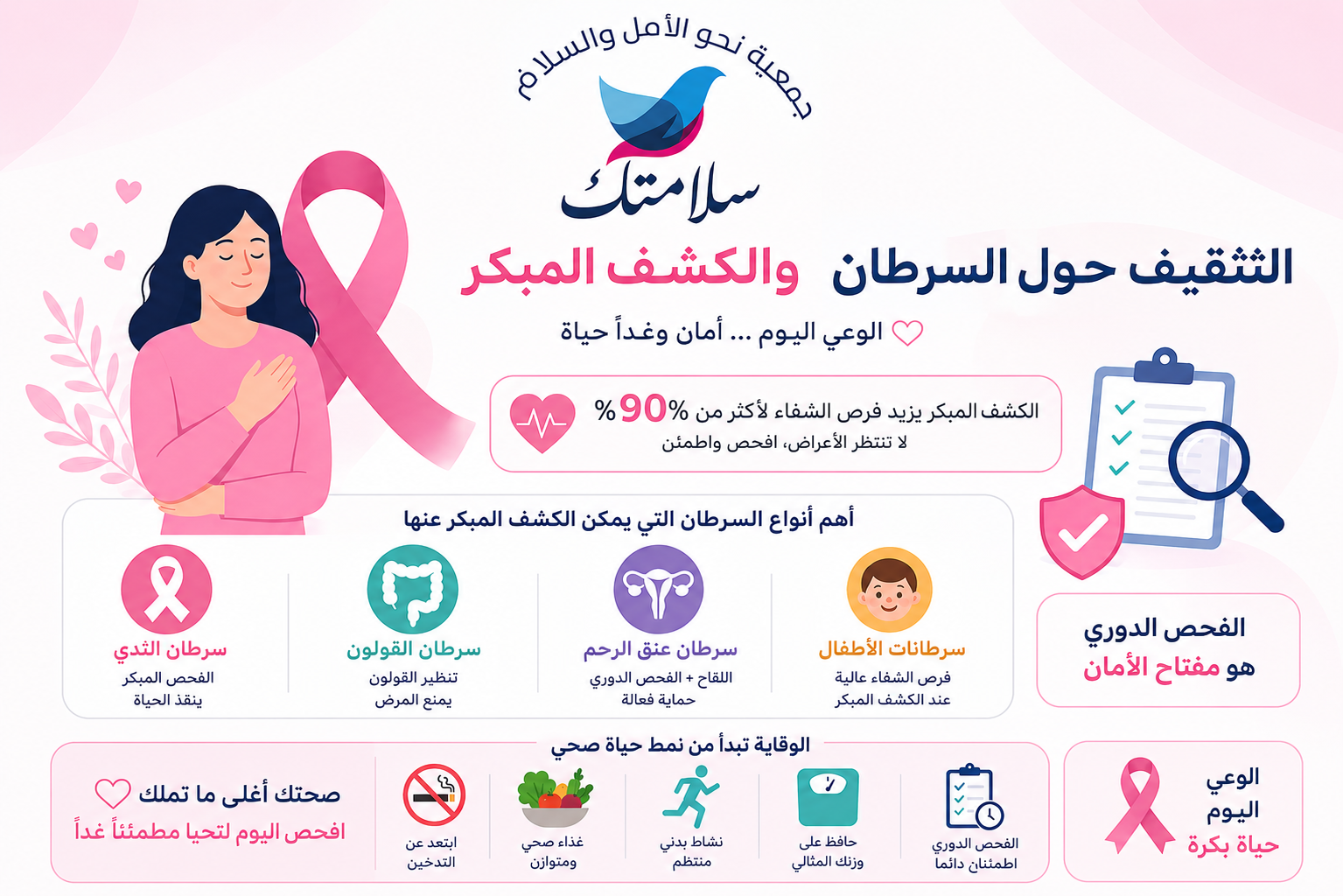
Cancer Awareness and Early Detection
Breast Cancer, Colorectal Cancer, Cervical Cancer, and Childhood Cancers
Introduction
Cancer is one of the leading causes of death worldwide. However, medical research confirms that a significant proportion of cancer cases can be prevented or successfully treated when detected at an early stage.
According to the World Health Organization (WHO), cancer causes approximately 10 million deaths each year globally, accounting for nearly one in every six deaths worldwide.
Global data also indicate that the most common cancers include breast cancer, colorectal cancer, lung cancer, and prostate cancer.
First: The Importance of Early Cancer Detection
Early detection is the cornerstone of improving survival outcomes. According to the World Health Organization:
Many types of cancer are highly treatable when detected early.
Reducing delays in diagnosis significantly increases survival rates.
Early diagnosis reduces the need for complex and advanced treatments.
Studies have also shown that early screening programs have saved millions of lives over the past decades, particularly for breast, cervical, and colorectal cancers.
Second: Global Statistics on Major Types of Cancer
1. Breast Cancer
The most common cancer among women worldwide.
Approximately 2.3 million new cases are diagnosed annually.
Responsible for hundreds of thousands of deaths each year.
📌 Importance of Early Detection
When detected early, survival rates can exceed 90% in certain early-stage cases.
Regular screening significantly reduces mortality rates.
2. Colorectal Cancer
The third most common cancer worldwide.
Approximately 1.9 million new cases are reported annually.
📌 Risk Factors
Unhealthy dietary habits.
Physical inactivity.
Advancing age.
📌 Early Detection
Colonoscopy can prevent disease progression by identifying and removing precancerous polyps before they develop into cancer.
3. Cervical Cancer
One of the cancers most strongly associated with Human Papillomavirus (HPV) infection.
Remains a leading cause of cancer-related deaths among women in many developing countries.
📌 Important Fact
More than 30% of cancer cases in low-income countries are linked to infections such as HPV.
📌 Prevention
HPV vaccination.
Regular Pap smear screening.
4. Childhood Cancers
Approximately 400,000 children are diagnosed with cancer worldwide each year.
📌 Most Common Types
Leukemia.
Brain tumors.
📌 Important Note
Survival rates improve significantly when childhood cancers are diagnosed early and managed in specialized healthcare centers.
Third: General Warning Signs That Require Medical Evaluation
Unexplained weight loss.
Persistent fatigue without a clear cause.
Unusual lumps or masses.
Unexplained bleeding.
Changes in bowel habits.
Persistent pain in different areas of the body.
Fourth: Cancer Risk Factors
According to the World Health Organization, the major risk factors include:
Tobacco use (a leading contributor to cancer-related deaths).
Obesity.
Physical inactivity.
Unhealthy diet.
Viral infections (such as HPV and Hepatitis viruses).
Environmental pollution.
Fifth: Cancer Prevention
Estimates suggest that approximately 40% of cancer cases can be prevented by reducing exposure to known risk factors.
Key Prevention Measures
Quitting smoking.
Following a healthy diet.
Engaging in regular physical activity.
Receiving preventive vaccinations (HPV and Hepatitis B vaccines).
Undergoing routine screening examinations.
Sixth: The Impact of Early Detection on Survival Rates
Breast Cancer: Survival rates can exceed 90% when diagnosed at an early stage.
Colorectal Cancer: Screening can prevent the disease before it develops.
Cervical Cancer: One of the most preventable cancers through regular screening.
Childhood Cancers: Cure rates are significantly higher with early diagnosis and specialized treatment.
Conclusion
Cancer is not a definitive death sentence. It is a disease that can often be managed effectively when detected early.
Health education plays a vital role in increasing public awareness and encouraging individuals to undergo regular screening without fear or delay, ultimately saving lives and improving quality of life.
References
World Health Organization (WHO) – Cancer Fact Sheets
International Agency for Research on Cancer (IARC)
National Cancer Institute (NCI)
Global Cancer Statistics Reports
WHO Guidelines on Early Cancer Detection
Details
- Blog category Community Health Education
- Added at 2026-06-14