







Gaza Shelter Needs Continue to Outpace Humanitarian Response
Gaza Shelter Needs Continue to Outpace Humanitarian Response
The June 2026 Shelter Cluster report highlights a widening gap between growing humanitarian needs and the available shelter response across the Gaza Strip.
The Gaza Strip continues to face a deepening humanitarian crisis, with humanitarian needs increasing at a pace that exceeds the capacity of the ongoing response. The June 2026 Shelter Cluster Monthly Report highlights that challenges related to the provision of shelter and non-food items (NFIs) remain among the most pressing humanitarian concerns, amid continued displacement and the widespread destruction of residential buildings and critical infrastructure.
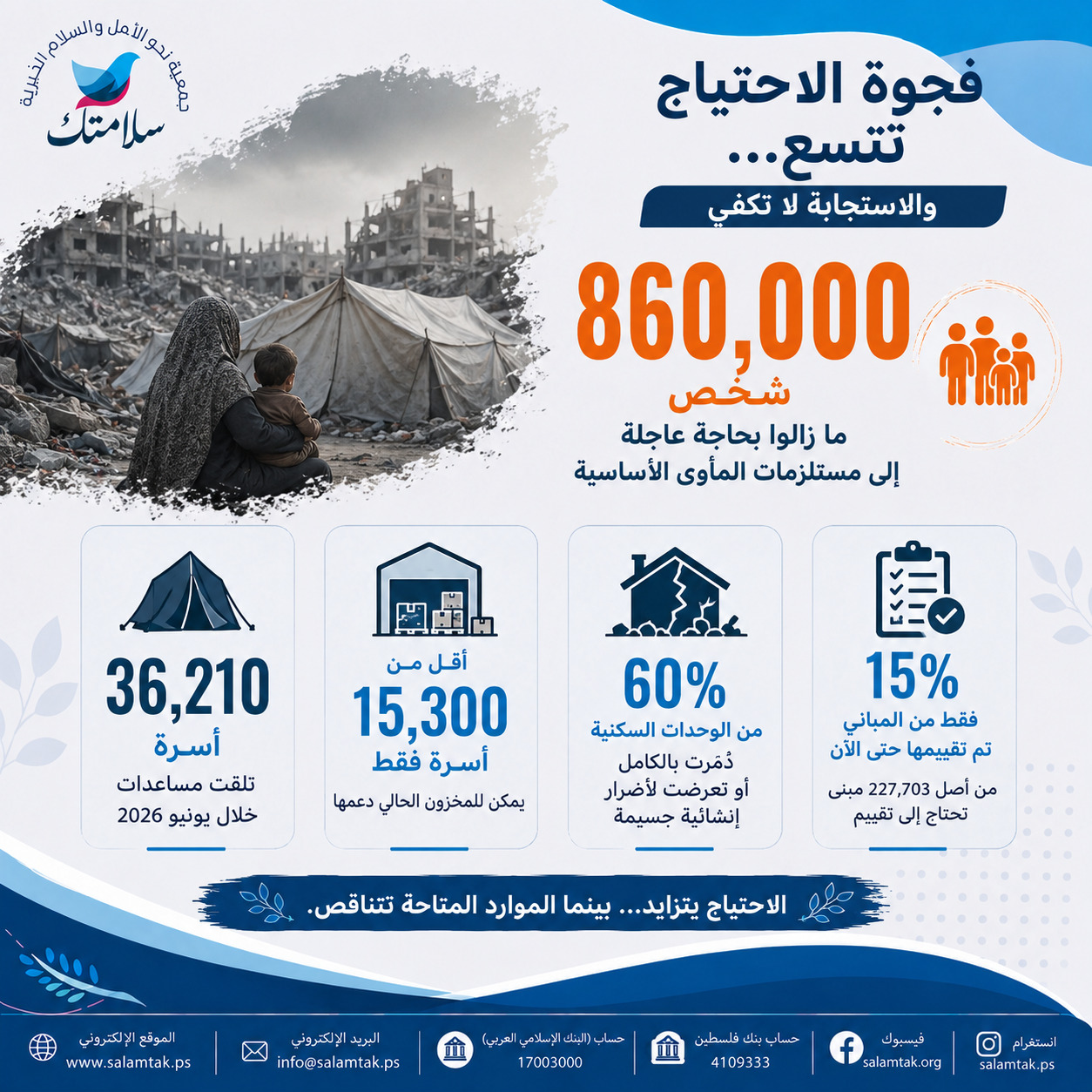
Despite operational constraints and challenging field conditions, humanitarian organizations and their partners have continued to implement interventions aimed at ensuring that affected families can meet their most basic needs. During June 2026, humanitarian actors working in the shelter sector provided assistance to 36,210 households through the distribution of shelter materials and non-food items, including essential emergency shelter supplies and basic household items that help families cope with displacement or damage to their homes.
Nevertheless, humanitarian needs continue to far exceed the resources currently available. According to the report, approximately 860,000 people remain in urgent need of essential shelter assistance, underscoring both the scale of the crisis and the growing number of people relying on humanitarian aid to meet their basic living requirements.
The report also draws attention to the limited availability of shelter resources within the Gaza Strip. Existing stocks of shelter materials and non-food items are sufficient to support fewer than 15,300 additional households, highlighting that the continuity of humanitarian operations depends directly on the sustained entry of humanitarian supplies and increased financial support to address growing needs.
Regarding damage assessments, the report notes that only 33,469 buildings have been assessed to date, representing approximately 15% of all buildings requiring comprehensive evaluation. This figure illustrates the significant amount of work that remains to fully understand the extent of the damage and to inform recovery and reconstruction planning.
Assessment findings further reveal the devastating impact on the built environment. Among the buildings assessed, 41% were found to be completely destroyed, while 59% sustained varying degrees of partial damage. At the housing-unit level, the data indicate that 60% of residential units have either been completely destroyed or suffered severe structural damage, rendering them uninhabitable or requiring extensive structural rehabilitation before families can safely return.
These findings demonstrate the magnitude of the shelter challenges facing Gaza. The crisis extends far beyond the provision of tents or basic relief items; it also requires sustainable shelter solutions that ensure minimum standards of safety, privacy, and stability for affected families, particularly in the context of prolonged displacement and recurring humanitarian emergencies.
The report emphasizes that the gap between humanitarian needs and the current response continues to widen—not because of a lack of humanitarian efforts, but because the number of people in need continues to grow while available resources, funding, and humanitarian supplies remain insufficient to meet actual demand.
These findings reinforce the importance of sustaining humanitarian support for the shelter sector, strengthening efforts to provide shelter materials and non-food items, and expanding damage assessment activities to ensure that humanitarian interventions are guided by the most urgent and evidence-based priorities.
Providing safe shelter is not merely a humanitarian intervention to address basic needs; it is a fundamental component of protecting human dignity, reducing health and protection risks, and strengthening the resilience of families and communities affected by the ongoing humanitarian crisis.
The report concludes that increased investment in the shelter sector, accelerated delivery of humanitarian supplies, and the expansion of response activities remain essential priorities to protect hundreds of thousands of families who continue to live under extremely difficult humanitarian conditions while awaiting access to the minimum requirements for a life of dignity.
Details
- Blog category Reports & Achievements
- Added at 2026-07-26